 1
1
In today’s competitive digital marketing landscape, running ads is not enough—keeping them effective is equally important. One major challenge advertisers face is ad fatigue, a condition where the target audience becomes overexposed to the same advertisement, leading to reduced engagement and poor campaign performance.
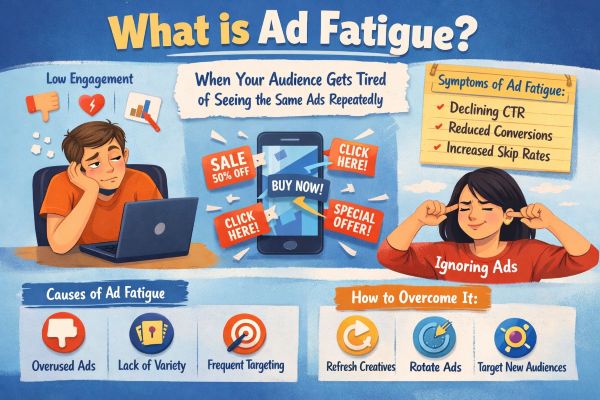
Ad fatigue occurs when users repeatedly see the same ad creatives across platforms such as social media, search engines, or display networks. Initially, the ad may attract attention, but over time, it loses its impact as users start ignoring it or reacting negatively. This results in lower click-through rates (CTR), increased cost per click (CPC), and declining return on ad spend (ROAS).
There are several key reasons behind ad fatigue. One of the most common causes is poor ad variation, where marketers fail to refresh creatives regularly. Another reason is overly narrow audience targeting, which causes the same users to see ads repeatedly. High-frequency ad delivery without rotation also contributes significantly to this issue.
The effects of ad fatigue can be harmful to any digital campaign. It not only reduces engagement but can also damage brand perception. Users may start associating the brand with repetitive or annoying ads, which weakens overall marketing effectiveness.
However, ad fatigue can be managed effectively with the right strategies. Marketers should regularly update ad creatives, test different formats, and rotate messages to keep content fresh. Expanding audience segments and using frequency capping can also help reduce overexposure. Additionally, analyzing performance metrics helps identify early signs of fatigue so adjustments can be made in time.
Understanding and preventing ad fatigue is essential for maintaining strong campaign performance and ensuring long-term digital marketing success.
.png)

_thumb.jpg)