 1
1
Choosing bamboo flooring can be a surprisingly involved process. Many homeowners are drawn to bamboo for its clean lines, durability, and sustainable reputation, but the real decision‑making happens once you begin comparing materials, construction methods, finishes, and grades. Having worked in a bamboo flooring factory, I’ve seen firsthand how differences inside the planks—often invisible from the outside—play a major role in long‑term performance.
What follows is a practical, experience‑based guide that walks through the factors that actually matter when selecting bamboo flooring, along with a few industry details that most buyers never hear about.
Understanding the Raw Material
Bamboo flooring begins with culms harvested at a specific age. The sweet spot is usually between five and seven years. Younger culms look similar but carry less density, absorb moisture more easily, and show wear sooner. Older culms can become overly brittle.
When comparing brands, look for suppliers who specify harvest age or who work with plantations that document growth cycles. Not all bamboo sold as “mature” truly meets that range.
Another point that rarely shows up on retail labels is the species. Most flooring uses Phyllostachys edulis—often called moso bamboo—because of its strength and straight grain. If a product uses a different species, that should be made clear; otherwise, it’s worth asking the seller.
Manufacturing Methods and Their Impact
Classic Horizontal and Vertical Construction
Traditional bamboo flooring uses strips cut from the culm, which are then laminated into planks.
- Horizontal construction shows the characteristic bamboo “nodes” across the surface, creating a warm, natural look.
- Vertical construction aligns strips on their edges, resulting in a tighter grain pattern with a more uniform appearance.
Both are stable options when well‑made, but their density depends heavily on adhesive type, resin content, and how tightly the strips are pressed.
Strand‑Woven Bamboo
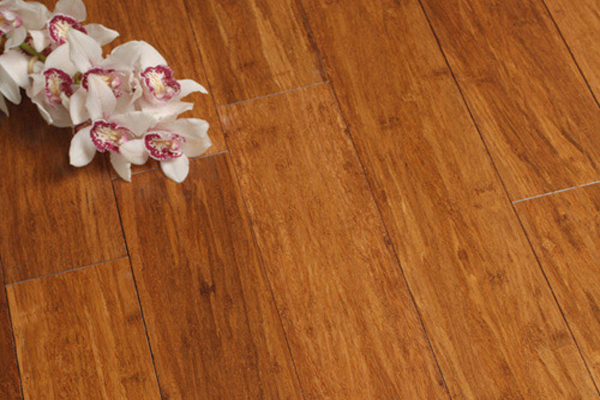
Strand‑woven bamboo came onto the market as a response to buyers seeking extreme hardness. Instead of using strips, the manufacturing process involves shredding bamboo into fibers, mixing them with resin, and compressing them under heavy pressure.
This method produces a dense material that, when properly cured, stands up well in high‑traffic areas. However, it’s not universally superior. Strand‑woven planks vary widely from one manufacturer to another. Over‑resination can make planks brittle, while under‑resination can lead to soft spots or delamination. Always look for products tested to standardized hardness and stability levels.