 1
1
Warranty and after-sales costs are
often ignored once a construction project is completed. However, repair work,
defect fixes, and follow-up services can quietly reduce profits if they are not
tracked properly. This is why construction
company bookkeeping plays a vital role in protecting long-term
profitability.
With the right bookkeeping system,
construction businesses can monitor warranty costs, control spending, and gain
a clear picture of how much projects truly cost—even after completion.

Understanding
Construction Company Bookkeeping
Construction company bookkeeping involves recording and organizing financial transactions
related to construction projects. This includes labor, materials,
subcontractors, and project expenses. Warranty and after-sales costs are part
of this process, even though they usually occur after the main work is
finished.
Proper bookkeeping ensures these
delayed expenses are not overlooked and are correctly linked to the original
project.
Why
Warranty and After-Sales Costs Matter
Most construction contracts include
a warranty period during which contractors must fix defects at no extra charge.
If these costs are not tracked, they can lead to unplanned expenses, reduced
margins, and cash flow problems.
Construction company bookkeeping helps businesses plan for these costs, track them
accurately, and avoid financial surprises that impact profitability and
customer trust.
Common
Warranty and After-Sales Costs in Construction
Typical warranty-related expenses
include:
- Repair labor
- Replacement materials
- Rework and correction costs
- Subcontractor repairs
- Inspection and testing
- Transportation and support costs
Without proper construction
company bookkeeping, these costs can mix with regular expenses, making it
difficult to measure their true impact.
Challenges
in Tracking Warranty Costs
Warranty expenses often appear
months after project completion. They may be recorded by different teams and
spread across multiple systems. Labor and materials may not be clearly linked
to warranty work, making cost tracking difficult.
This is where construction
company bookkeeping provides structure by centralizing records and clearly
assigning costs to the correct project.
How
Construction Company Bookkeeping Helps
Effective bookkeeping helps by:
- Creating separate accounts for warranty costs
- Linking warranty expenses to specific projects
- Monitoring recurring warranty issues
- Improving future project estimates
- Producing clear financial reports
This makes it easier to understand
how warranty work affects overall project performance.
Best
Practices for Tracking Warranty and After-Sales Costs
To manage warranty costs
effectively:
- Set up separate warranty expense categories
- Record each warranty claim in detail
- Use job codes to link warranty costs to projects
- Create warranty reserves during project planning
- Review warranty expenses regularly
These practices strengthen construction
company bookkeeping and improve financial control.
Using
Software to Manage Warranty Costs
Construction accounting software
makes warranty tracking easier by assigning costs to projects, generating
warranty reports, managing reserves, and reducing manual errors. Software
improves accuracy and saves time, making bookkeeping more efficient.
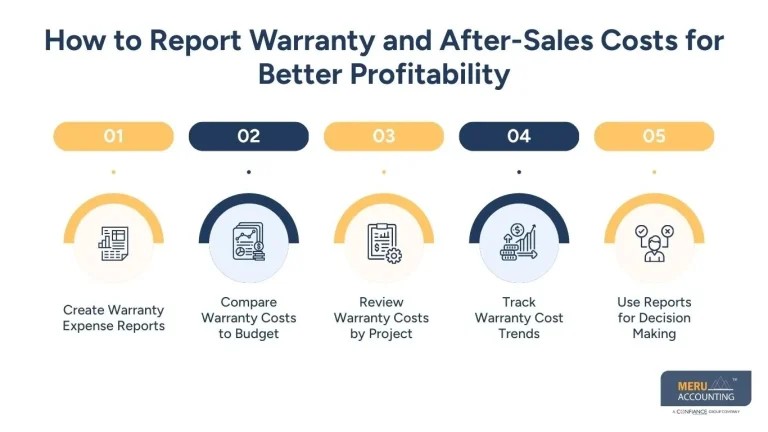
Reporting
Warranty Costs for Better Profitability
Regular warranty reports help
construction businesses:
- Compare actual costs to budgets
- Identify high-risk projects
- Spot recurring defects
- Improve future pricing and planning
This turns construction company
bookkeeping into a valuable decision-making tool rather than just
recordkeeping.
Why
Choose Meru Accounting
Meru Accounting provides specialized construction company bookkeeping
services designed to track warranty and after-sales costs accurately. We help
set up proper accounts, generate clear reports, improve cash flow planning, and
reduce financial risks.
Our tailored bookkeeping solutions
help construction companies stay organized, protect profits, and maintain
long-term financial stability.
Key
Takeaways
- Warranty and after-sales costs can reduce profits if
not tracked - Construction company bookkeeping ensures accurate warranty cost tracking
- Separate warranty accounts improve clarity and control
- Regular reviews and reports help manage expenses
- Software improves accuracy and efficiency

_thumb.jpg)
_thumb.jpg)